Hearing - Axel Health Centre
Advanced hearing evaluations and personalized solutions to treat hearing loss, tinnitus, and balance-related conditions.
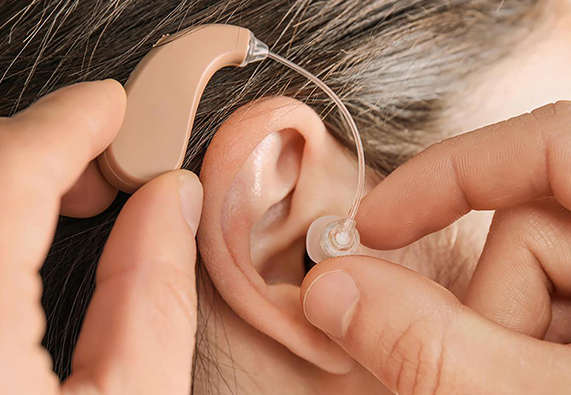
Life through Improved Hearing
Hearing Aids
Hearing aids are small electronic devices designed to improve hearing by amplifying sounds for individuals with hearing loss. They help people hear better in everyday situations, enhancing communication, social interaction, and overall quality of life.
Hearing loss can result from aging, noise exposure, infections, genetics, or injury. Depending on the type and severity of hearing loss, hearing aids can be customized to suit individual needs.
Faster Recovery and Lasting Relief
Hearing Testing
Hearing testing, also known as audiometry, is a critical process used to evaluate an individual’s hearing ability. It helps diagnose the type, degree, and configuration of hearing loss and guides appropriate treatment or intervention. Hearing tests are important for people experiencing hearing difficulties, tinnitus (ringing in the ears), balance problems, or for routine screenings.
The most common type of hearing test is pure tone audiometry, where the patient wears headphones and listens to a series of beeps or tones at various pitches and volumes. The patient indicates when they hear a sound, allowing the audiologist to plot a hearing threshold chart (audiogram).
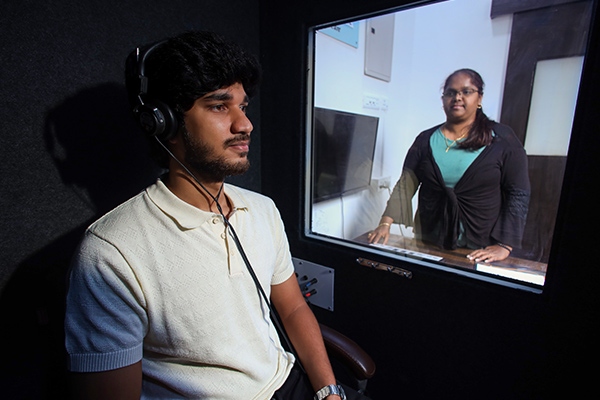
Audiometry
Audiometry is the scientific method used to measure hearing acuity and diagnose hearing loss. It evaluates how well a person can hear sounds of different pitches and volumes, helping to identify the type, degree, and configuration of hearing impairment. Audiometry is an essential tool for audiologists and ENT specialists in diagnosing hearing disorders and guiding treatment plans.
Audiometry is typically painless, non-invasive, and quick, usually taking about 30-60 minutes. It is useful for diagnosing a wide range of hearing problems, from age-related hearing loss to noise-induced damage, infections, or congenital issues.
Newborn Hearing Tests
Newborn hearing tests are critical screenings performed shortly after birth to identify hearing impairments early. Early detection is vital because hearing is essential for speech, language, and cognitive development. Identifying hearing loss in newborns allows timely intervention, improving communication skills and overall development.
There are two primary methods used for newborn hearing screening:
- Otoacoustic Emissions (OAE) Test: This test measures sound waves produced by the inner ear (cochlea) when responding to sounds. A tiny probe is placed in the baby’s ear canal, emitting soft clicks and recording the ear’s response. If the cochlea responds normally, the test is passed.
- Auditory Brainstem Response (ABR) Test: This more detailed test measures the electrical activity in the auditory nerve and brainstem when sounds are played. Small electrodes are placed on the baby’s head to record responses. ABR is typically used if the OAE test is failed or if the baby is at high risk for hearing loss.
Video Nystagmography (VNG)
Video Nystagmography (VNG) is an advanced diagnostic test used to evaluate patients with dizziness, vertigo, and balance disorders. It helps identify the cause of vertigo by assessing the function of the inner ear and the central nervous system’s control over eye movements.
Vertigo is a sensation of spinning or dizziness that can result from inner ear problems, neurological disorders, or other medical conditions. VNG tests the vestibular system, which controls balance, by measuring involuntary eye movements called nystagmus. Nystagmus occurs naturally as the eyes try to stabilize vision during head movements or changes in position.
Vestibular Evoked Myogenic Potential (VEMP)
Vestibular Evoked Myogenic Potential (VEMP) is a specialized test used to assess the function of the vestibular (balance) system, particularly the saccule and the inferior vestibular nerve. It helps diagnose balance disorders by measuring reflexes generated in neck or eye muscles in response to sound stimulation.
The vestibular system, located in the inner ear, is responsible for maintaining balance and spatial orientation. VEMP testing evaluates how well parts of this system respond to sound or vibration stimuli, providing important information about vestibular nerve pathways and inner ear function.
Electrocochleography (ECOCHG)
Electrocochleography (ECOCHG) is a specialized diagnostic test used to evaluate the inner ear and auditory nerve function. It is particularly helpful in assessing patients with symptoms such as vertigo, dizziness, hearing loss, or a suspected diagnosis of Ménière’s disease. The test measures the electrical responses generated within the cochlea and auditory nerve in response to sound, helping to detect fluid imbalances or pressure changes in the inner ear. ECOCHG is a safe and minimally invasive procedure that aids in accurate diagnosis and guides appropriate treatment plans for balance and hearing disorders.
Get in Touch
Have questions or need assistance?
Get in touch with our team today!

About Us
Our Services
Contact Info
- +91 9790810880
- info@axelhealthcare.in
- No. 6B/5, Manasarovar Nagar, near Manapakkam, Ramamoorthy Nagar